

Have you ever been handed a pelvic floor assessment report? A sheet of paper filled with numbers, waveforms, reference ranges, and arrows pointing up or down. Some measurements fall within the stated range; others do not. At the bottom, the report may say things like
“low pelvic floor muscle tone,”
“prolonged contraction time,” or
“biofeedback and treatment recommended.”
It feels a little like getting a report card back in school,isn’t it?
But here is the question:
Can your pelvic floor really be graded like an exam, with one sheet of numbers determining whether you pass or fail?
Or imagine that your report says you passed, yet you still experience pelvic heaviness in everyday life—or have leaked urine a few times. Is your pelvic floor functioning well, or not?
At DocGao, we believe the answer is far more complex than a single sheet of paper.
① First, Let’s Read This Pelvic Floor “Scorecard”
A 36-year-old woman who was scheduled for testing 42 days after giving birth. The assessment lasted approximately three minutes. It recorded pelvic floor muscle electrical activity at rest, during quick contractions, during sustained contractions, and while relaxing after a contraction.
Let’s look at a few of the numbers.
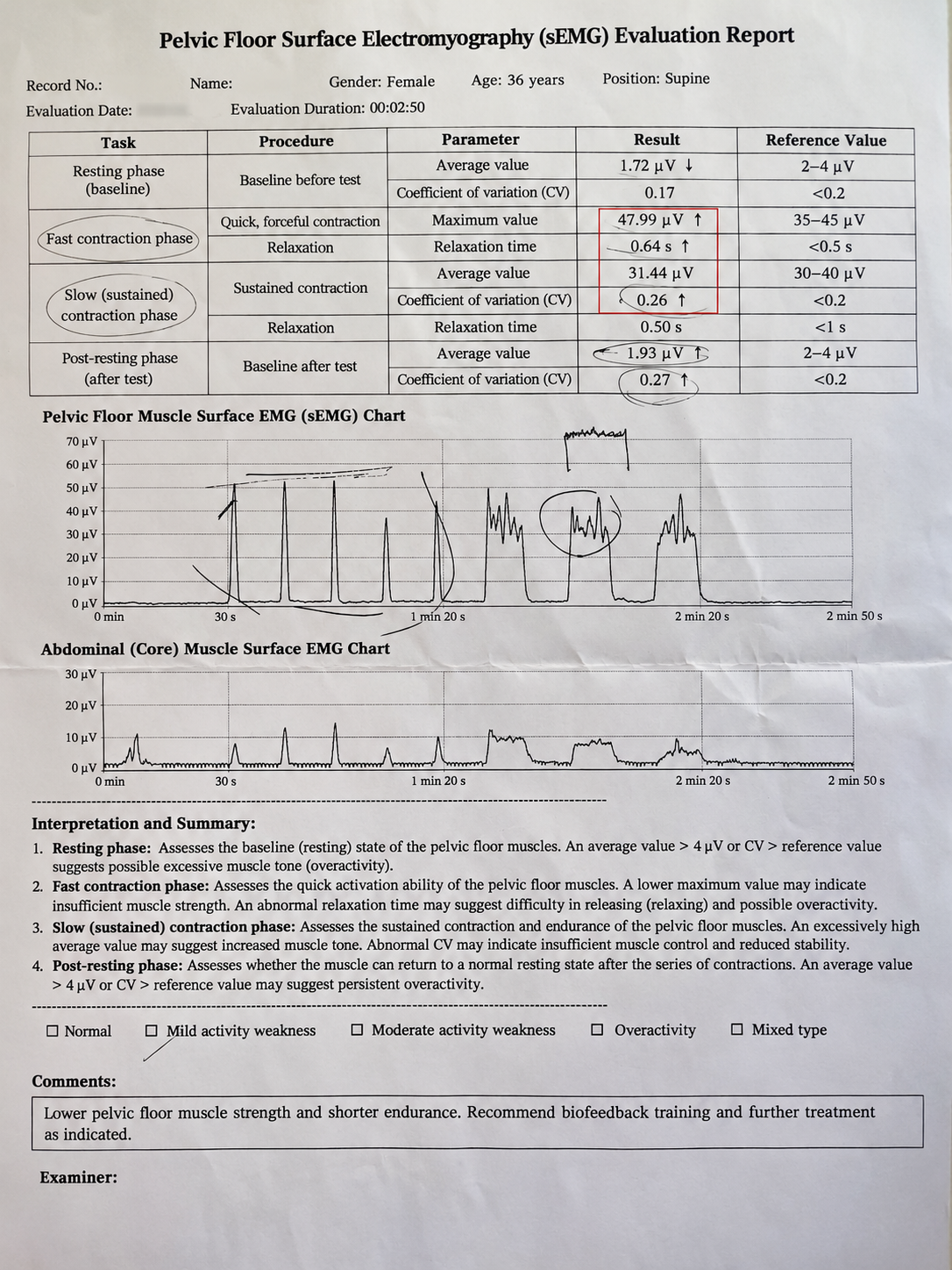
Her peak EMG reading during quick contractions was above the device’s reference range, while her average reading during sustained contractions fell within it. Yet relaxation after quick contractions took slightly longer, and electrical activity during sustained contractions varied more than the device’s threshold allows.
So are her pelvic floor muscles strong or weak?
The truth is, I cannot answer that from this report alone.
That is because microvolts (μV) measure electrical activity associated with muscle activation—not the actual force a muscle produces. A high peak EMG signal during a quick contraction does not necessarily mean the pelvic floor produces adequate closure or upward lift. Likewise, a low resting EMG reading does not establish that the muscles are overly relaxed or weak.
Reference ranges, coefficients of variation, and automatically generated interpretations can also be affected by the device, probe placement, whether the patient understands the instructions, the testing protocol, and the software algorithm. This report may provide useful clues, but it should not be used as a stand-alone diagnosis.
② Why Meeting a Strength Target Is Not the Same as Meeting a Functional Goal
Imagine two women.
The first can produce a very strong pelvic floor contraction during a clinic visit. Every score on her report falls within the expected range, yet she leaks urine whenever she jumps rope.
The second has relatively modest pelvic floor strength, but she can run, exercise, and go about her day without bladder-control concerns.
Which woman has better pelvic floor function?
Clearly, strength scores alone cannot answer that question.
The pelvic floor is not a group of muscles whose only job is to “squeeze hard” during a test.
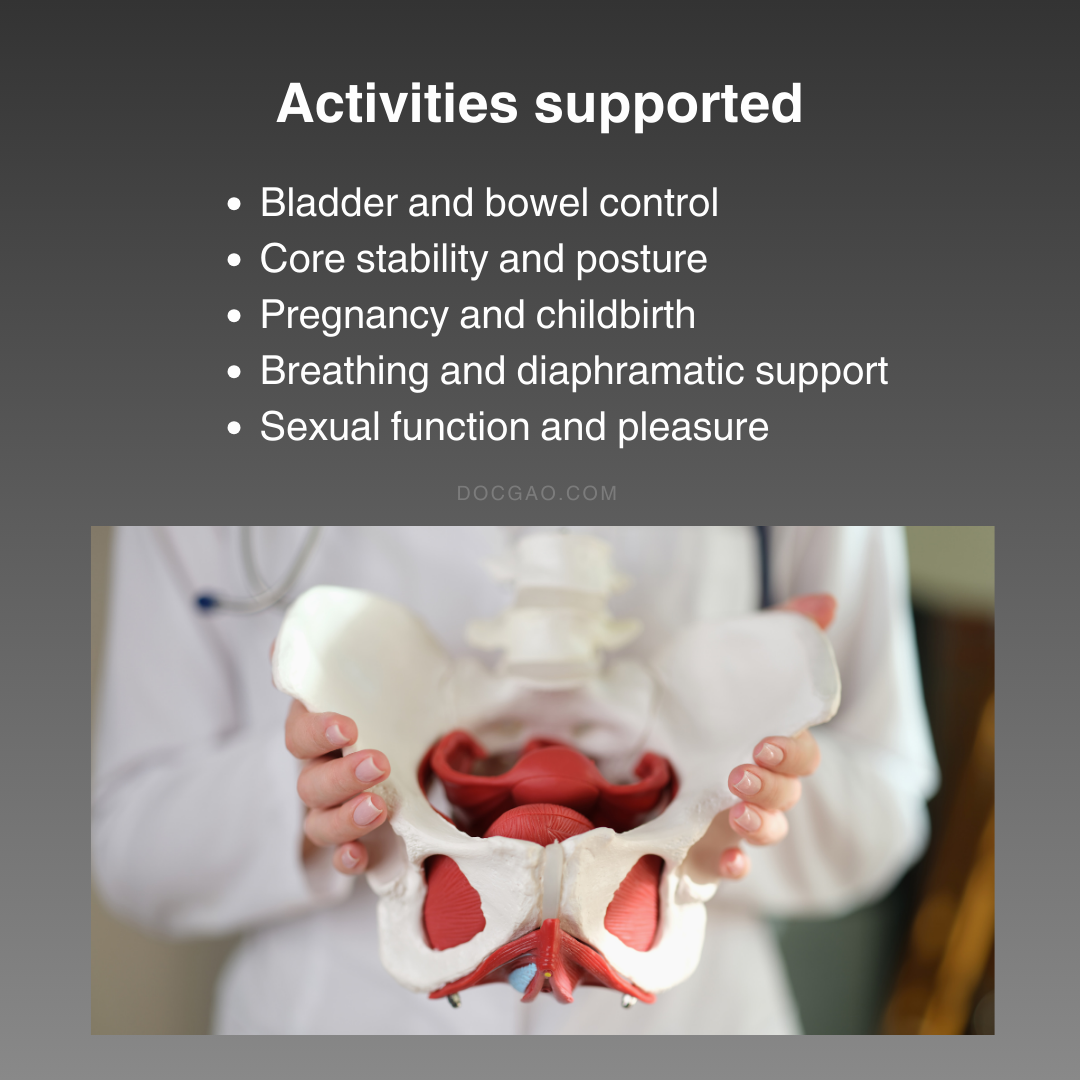
Located at the base of the pelvis, these muscles help support the pelvic organs and contribute to several functions, including urination, bowel movements, core-stability function, intra-abdominal pressure, pregnancy and childbirth, and sexual function. A healthy pelvic floor needs to contract at the right time, sustain a contraction when needed, and relax when contraction is no longer necessary.
Being able to generate force is one ability. Using that ability appropriately and effectively in everyday life is the function that pelvic floor physical therapists care about.
Of course, not every problem in these areas originates in the pelvic floor muscles themselves. Urine leakage, for example, has different types and mechanisms, so symptoms and medical assessment must guide interpretation.
③ What Does a Pelvic Floor Physical Therapist Actually Assess?
Why does an initial pelvic floor physical therapy visit include a "internal pelvic floor examination"?
In the United States, pelvic floor physical therapy is a vertically segmented specialty area under the physical therapy profession, provided by physical therapists with specialized certification in treating pelvic floor dysfunctions. Based on the patient's chief complaint and rehabilitation goals, a pelvic floor physical therapist will conduct an external physical examination and/or an internal examination; through vaginal and anorectal examinations, a comprehensive assessment is made of the patient's pelvic floor muscle tone, elasticity, and pain and tenderness, in order to identify the root cause of the problem.
PERFECT:A More Complete Framework Than One Strength Score (the "gold standard" of pelvic floor function)
In pelvic floor physical therapy, we use the PERFECT Scheme to document several aspects of voluntary pelvic floor muscle performance. Developed by Laycock and Jerwood, it includes the following elements. [1]
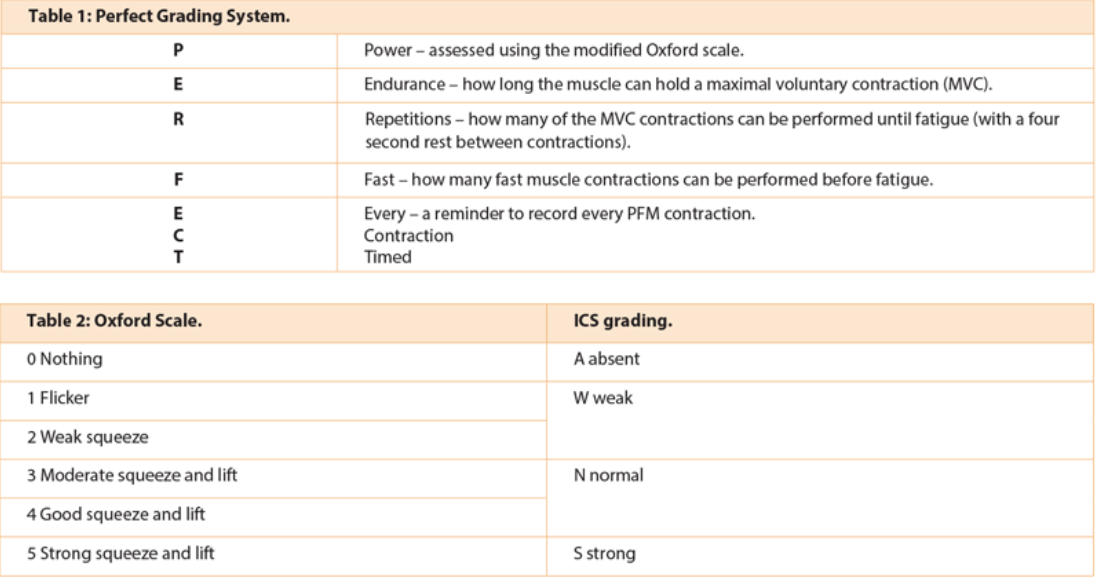
PERFECT is more systematic than a single strength grade, but it remains only one part of our pelvic floor assessment. The following clinical questions also matter.
1. Different positions and different tasks: Does performance change?
Lying down at rest and during voluntary contraction: We observe baseline status, contraction direction, strength, endurance, and relaxation.
Standing and coughing: Depending on symptoms, we observe support under gravitational load, the response to coughing, and any urine leakage.
Squatting, lifting, and exercise tasks: We observe movement strategies, breathing, symptoms, and activity tolerance under different demands.
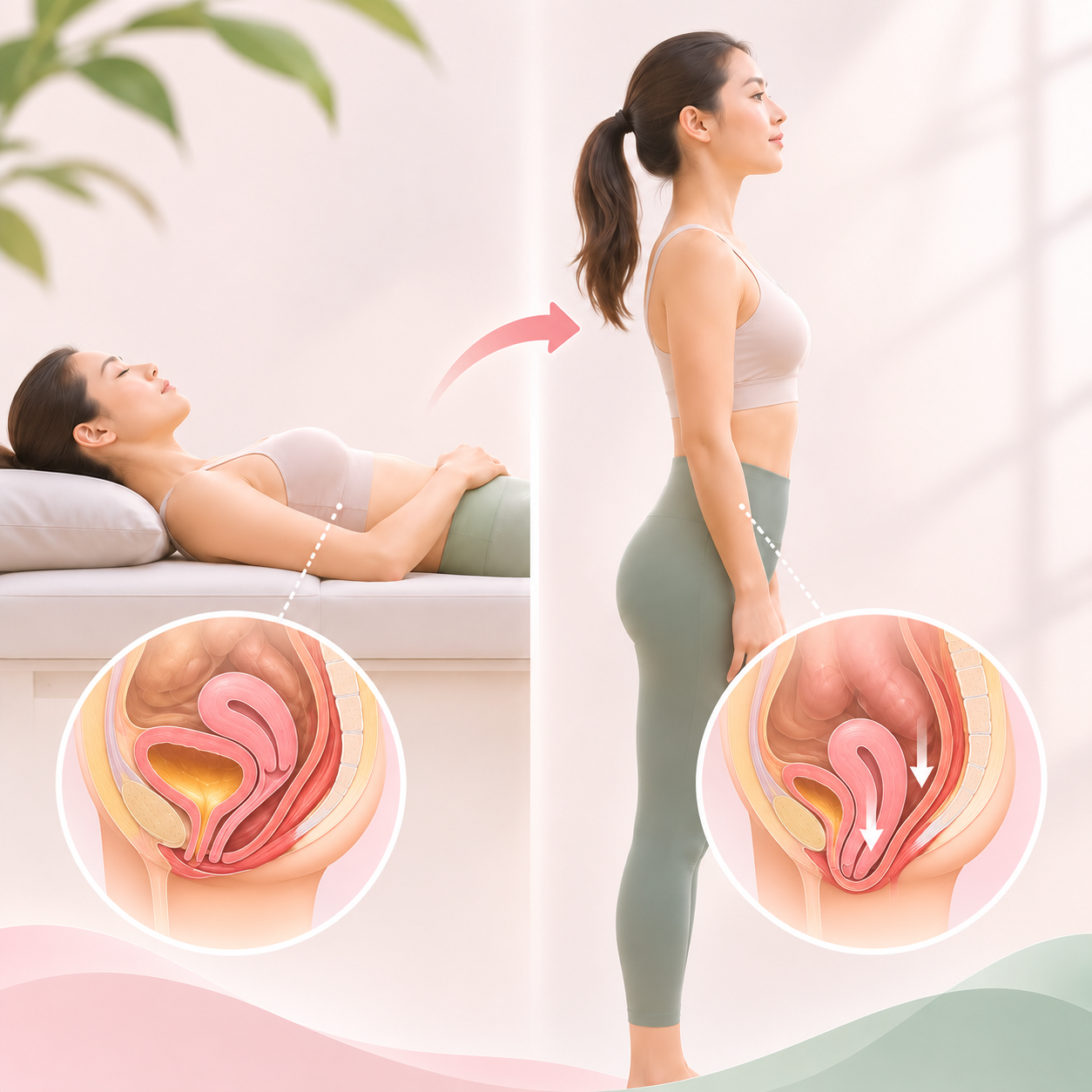
The same person may perform differently when lying down versus standing. I encountered many patients had no problem when lying down being assessed, whereas prolapse presented while they got off the table right away. Physical activity also places demands on the body that a static examination cannot reproduce. That is why a brief EMG test in a fixed position cannot address every clinical question.
2. Pelvic organ support: What happens to prolapse during a contraction?
If a patient has pelvic organ prolapse, we may observe the position of the pelvic organs at rest, during bearing down, and during a voluntary pelvic floor contraction. For example, can a contraction lift descended tissue upward? Does the descent become more pronounced with coughing or straining?
Whether prolapse moves upward during contraction is just one functional observation. It does not replace standardized prolapse staging, such as POP-Q, and the degree of movement alone cannot determine treatment success. That is why pelvic floor physical therapists often collaborate with physicians from other specialties through multidisciplinary care to support comprehensive management.
3. Contraction initiation and quality: Can the muscles respond when needed? Is there a squeeze—and an inward, upward lift?
Voluntary contractions and the responses that occur during coughing are not exactly the same. An effective pelvic floor contraction usually involves a squeeze around the vaginal, urethral, and anal regions and may also produce an inward and upward movement of pelvic floor structures.
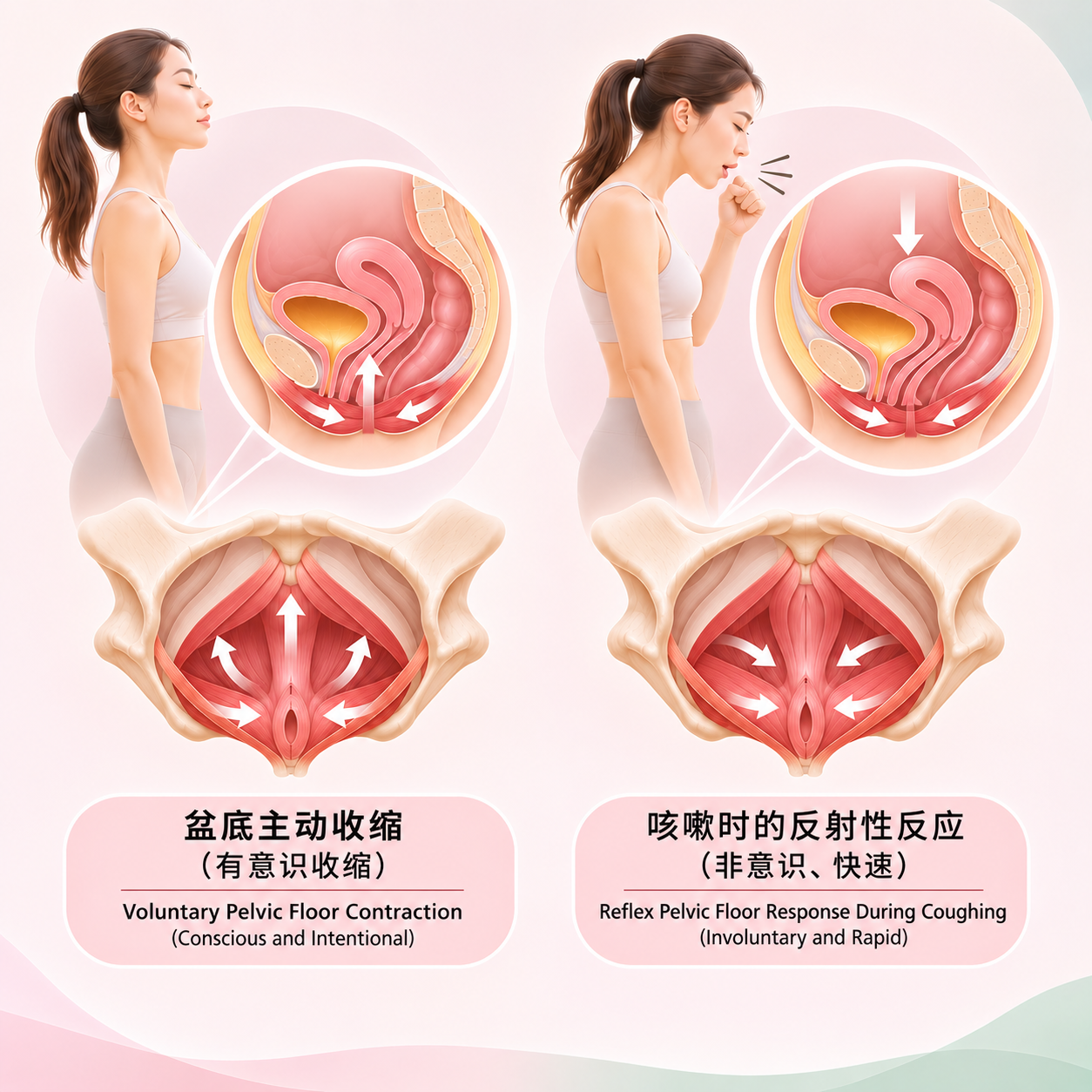
Through observation, palpation, and, when indicated, techniques such as transabdominal ultrasound, a pelvic floor physical therapist can assess the direction, extent, and quality of that movement. When findings suggest other concerns, we may refer the patient to a gynecologist, urologist, colorectal specialist, or another physician for additional evaluation.
4. Relaxation: Can the muscles truly let go?
This is so crucial!
Many patients can contract their pelvic floor but struggle to relax fully afterward. For some, adding more Kegels without addressing their individual symptoms and relaxation difficulties may make symptoms more noticeable—or even worse. This is a clinical possibility, not something that happens to everyone.
During assessment, we look at whether relaxation is complete, whether it takes extra time, and whether it is accompanied by pain or discomfort. That tells us more than simply looking at a resting EMG number.
Every component of a pelvic health assessment is selected according to the patient’s symptoms, goals, and informed consent. Not everyone needs—or chooses—to undergo every examination.
④ Is Pelvic Floor Function Only About the Pelvic Floor Muscles?
Of course not.
As we discussed earlier, the pelvic floor is part of a complex system involving bones, fascia, ligaments, nerves, and muscles. A pelvic floor physical therapist may therefore explore other areas as well:
Pelvis, hips, and spine:Mobility, pain, and tolerance for physical loading in these areas may influence a patient’s movement choices and performance.
Breathing and core muscles:The diaphragm, abdominal wall, and pelvic floor have functional relationships. We observe how a patient breathes, where movement may be limited, how they manage abdominal effort and intra-abdominal pressure during activity, and whether these strategies relate to their symptoms.
Coccyx and surrounding tissues:If someone has tailbone pain, discomfort while sitting, pelvic pain, or a relevant injury history, it may be useful to assess coccygeal mobility, nearby tissues, and muscle attachment areas.
Lifestyle and other health factors:Bowel habits, chronic constipation, urinary urgency, hydration habits, sexual activity, childbirth history, previous surgery, hormonal changes, pain, sleep, and psychosocial factors may all be relevant to pelvic floor symptoms or quality of life.
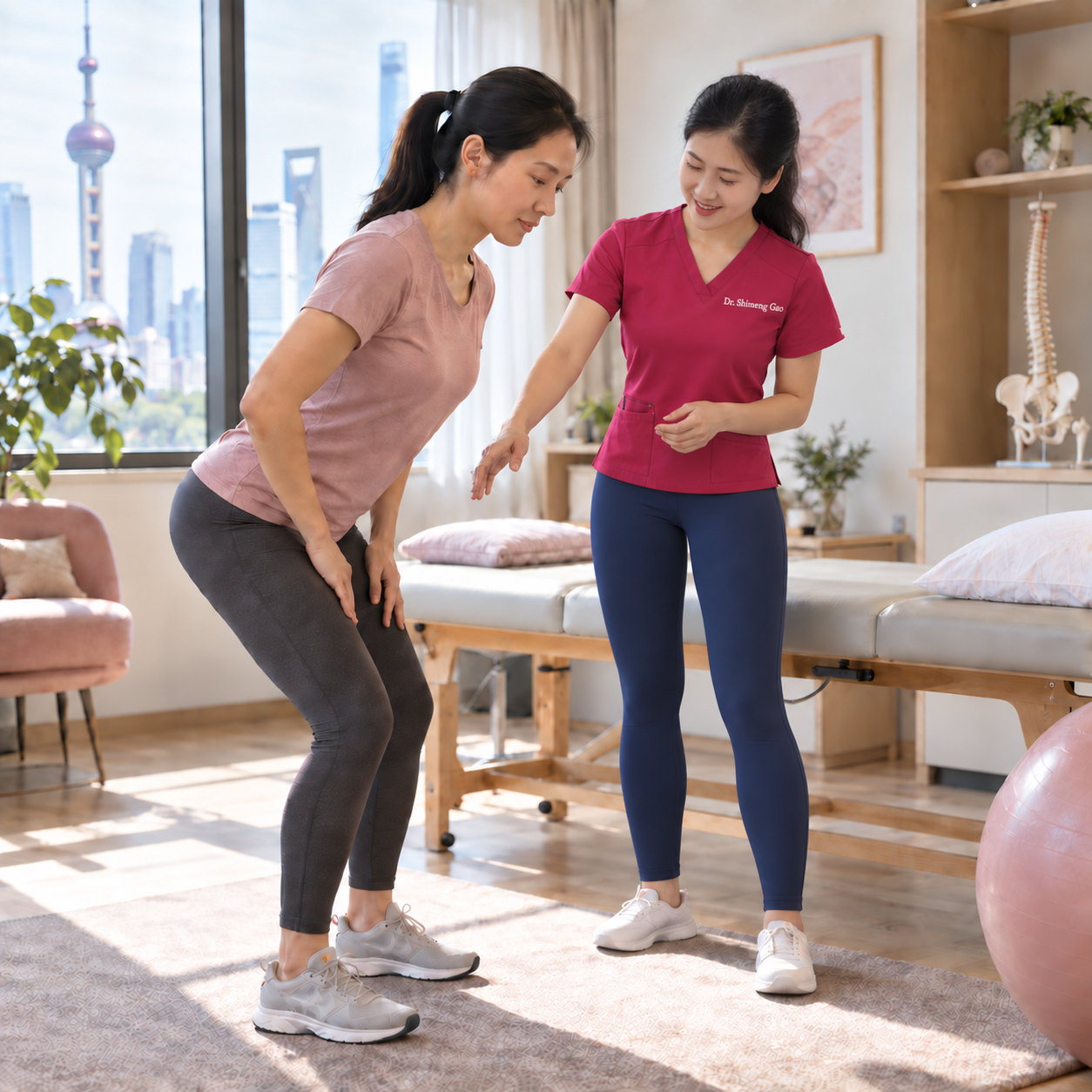
In short, a pelvic floor physical therapist spends time getting to know you as a whole person. We use what we find to decide what matters most, what to address first, and how to build your treatment plan step by step.
⑤ Machine-Based Testing Is Just One Piece of the Puzzle
Please don’t misunderstand: this is not an article against technology.
Surface EMG, biofeedback, ultrasound, and pressure measurements can all provide valuable information in appropriate clinical settings. For example, when someone has very limited pelvic floor contraction ability or cannot identify how to activate the muscles (MMT 0–2), biofeedback may be particularly helpful in this stage of recovery.
Yet, these tools are not essential for every patient. The UK’s NICE guidelines recommend supervised pelvic floor muscle training as first-line conservative treatment for women with stress or mixed urinary incontinence. They also advise against routinely adding pelvic floor EMG or pressure biofeedback for everyone. When someone cannot perform an effective voluntary pelvic floor contraction, supplementary techniques may be considered. [2,3]
So the key question is not how advanced a machine is. It is:
Why are we measuring this variable?
Does it help us understand the patient’s problem?
And how will the result change our clinical decisions?

⑥ DocGao: From a Report Back to the Whole Person
At DocGao, our assessments are never just about finding an abnormal number. We want to know:
When did your symptoms begin?
Which movements or activities cause discomfort?
What would you like to be able to do again? Run, jump, carry your child, return to sexual activity—or simply go out without worrying about urine leakage?
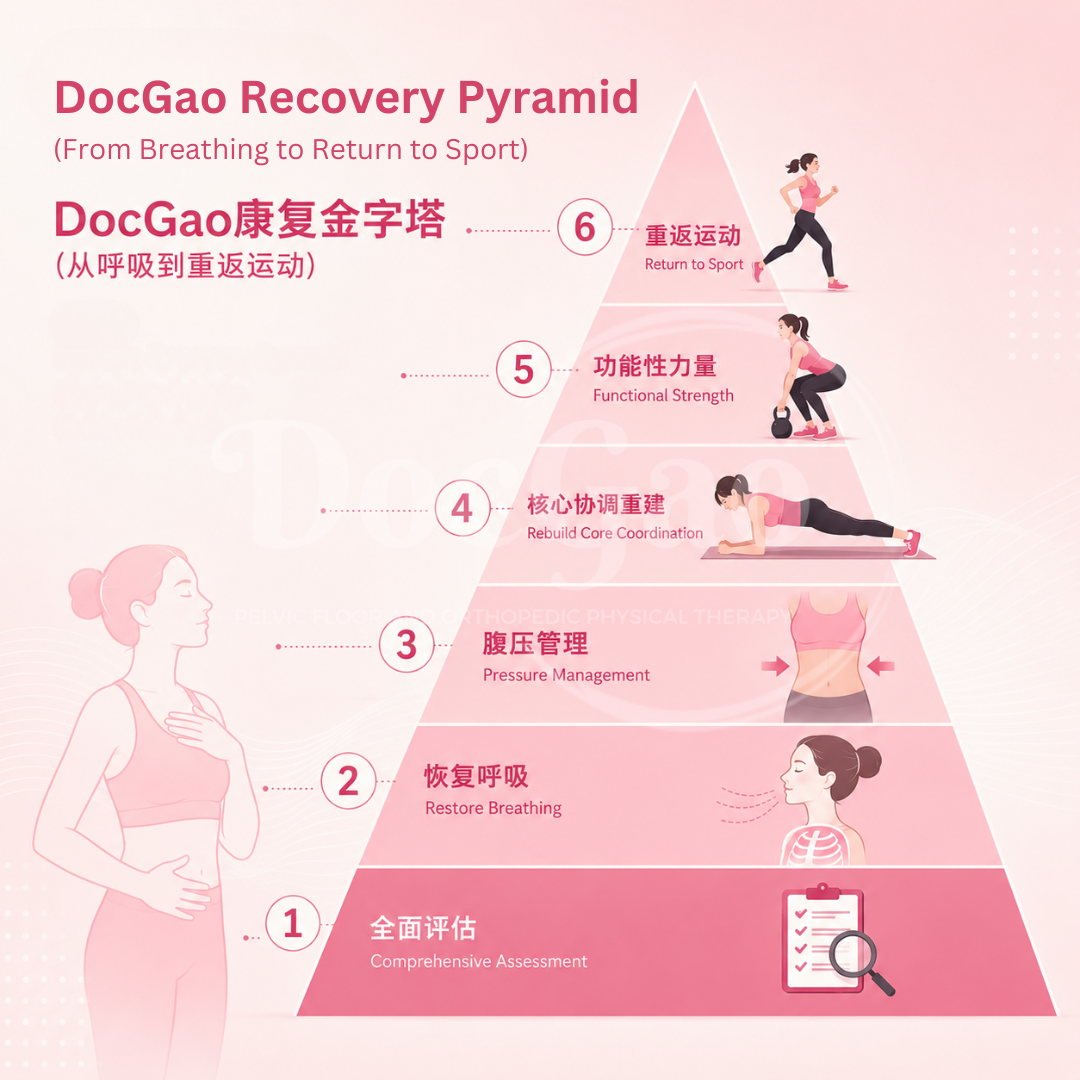
When appropriate, we bring together information about pelvic floor muscle performance, breathing, movement coordination, strength, activity demands, and lifestyle to build an individualized rehabilitation plan.
Some people need to improve pelvic floor strength. Others need better contraction and relaxation control. Still others may benefit from bladder training, functional exercise, or additional medical care.
Treatment does not mean giving everyone the same Kegel routine. Meaningful progress is not just a change in the numbers on a report. It is being able to live with greater comfort and confidence.
Final Thoughts
The next time you receive a pelvic floor assessment report, consider asking yourself:
“What does this report tell me?”
”What does it leave out?“
“Have my symptoms, physical function, and personal goals been assessed with equal care?”
A report card can capture how someone performed on one exam. It cannot define everything that person is capable of.
The same is true of your pelvic floor.
参考文献 References
1. Laycock J, Jerwood D. Pelvic floor muscle assessment: the PERFECT scheme. Physiotherapy. 2001;87(12):631–642. doi:10.1016/S0031-9406(05)61108-X.
2. National Institute for Health and Care Excellence. Urinary incontinence and pelvic organ prolapse in women: management. NICE guideline NG123. 2019.
3. National Institute for Health and Care Excellence. Pelvic floor dysfunction: prevention and non-surgical management. NICE guideline NG210. 2021.
医学免责声明:本文用于健康教育,不构成对报告持有者的诊断,也不能替代个体化医疗评估。报告中的识别信息在公开发布前已去除。
Medical Disclaimer: This article is intended for health education purposes only. It does not constitute a diagnosis for the report holder and cannot replace individualized medical evaluation. Any identifying information in the report has been removed prior to public release.